
LINK: School Learning Plan 2025-26
LITERACY
Literacy Goal: |
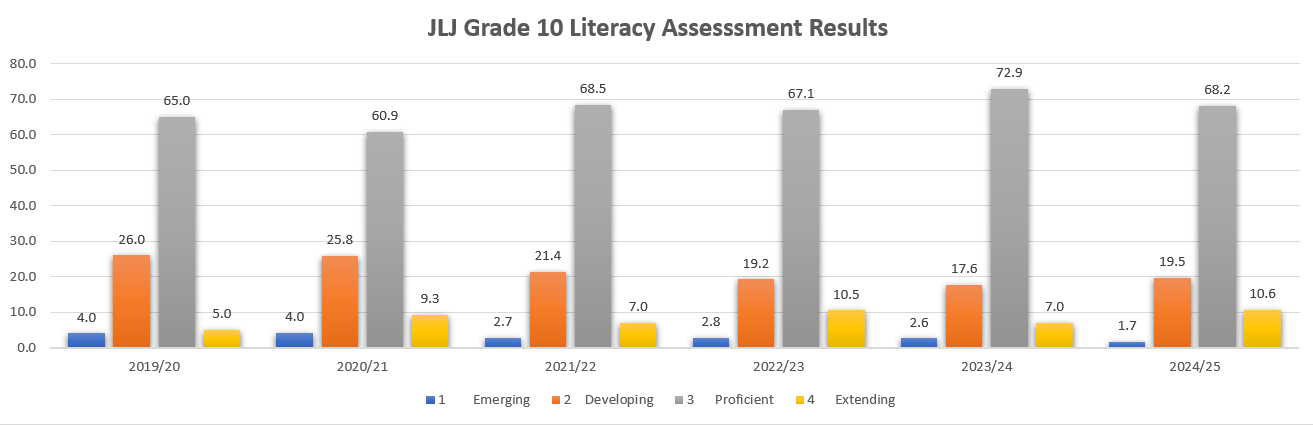
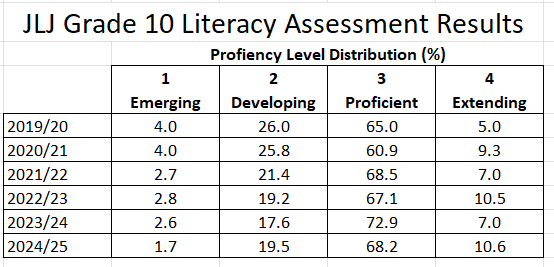
Goal: Increase the percentage of students achieving a proficient or extending score on the Grade 10 Provincial Literacy Assessment.
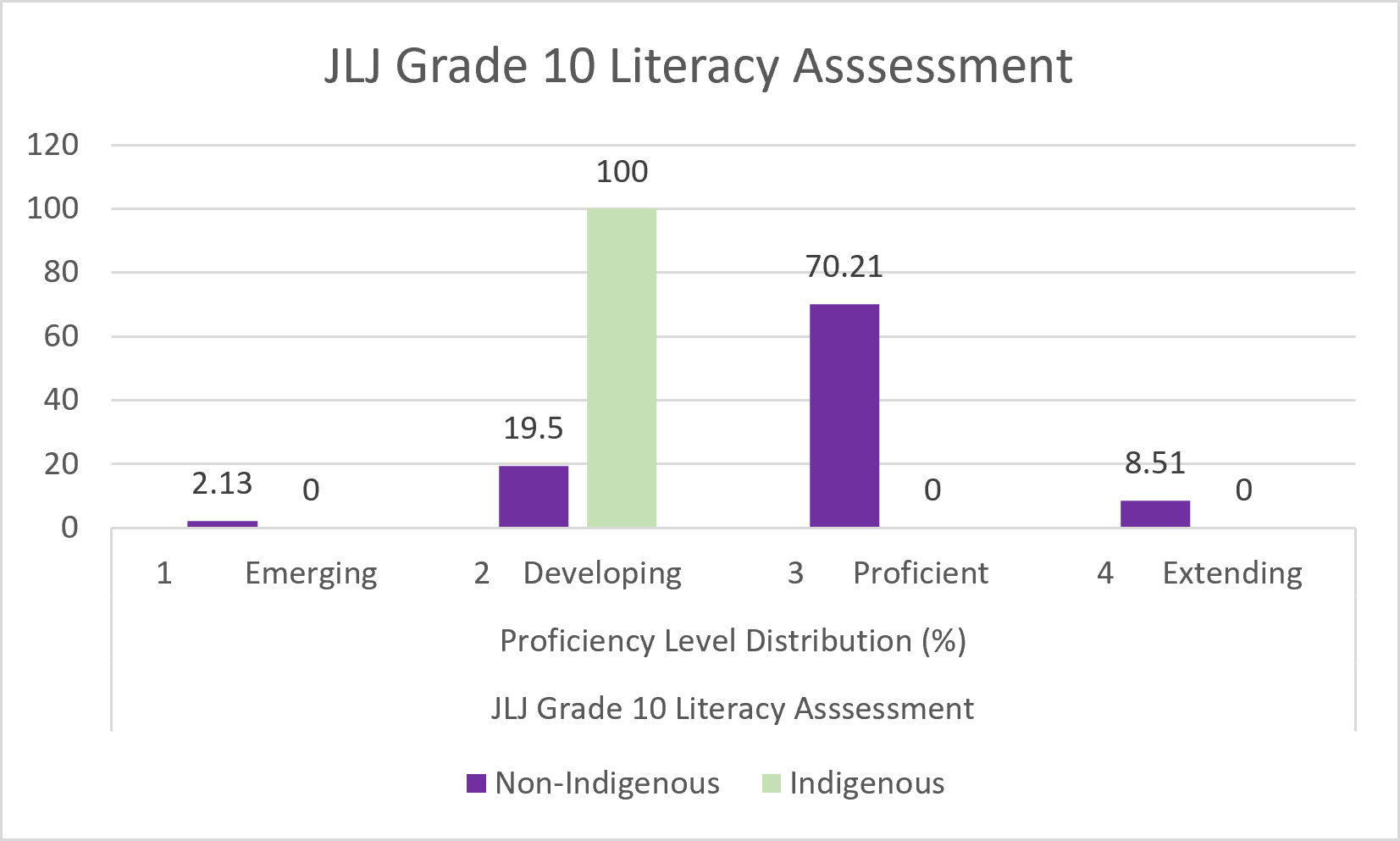
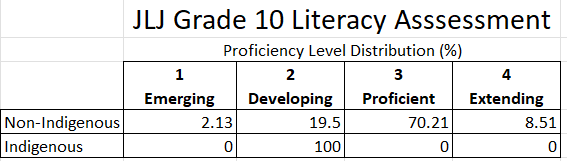
Targets: · Increase the percentage of students achieving a proficient or extending to greater than 80% by June 2026. · Increase the percentage of students achieving an extending score to greater than 12% by June 2026. · Increase the percentage of Indigenous students achieving a proficient or extending score to be on par with non-Indigenous students by June 2026.
|
Strategies and Actions: |
As a school we plan to focus on the following strategies and actions this year:
Establish a cohesive and consistent approach to instruction by… · aligning teaching strategies (ie. reader/writer notebooks - daily writing and writing instruction, daily silent reading, engaging in a variety of mentor texts, etc) · providing specific timely feedback · aligning rubrics and assessments (ie. SS 10 year-end skills assessment) · teaching student to self-assess and set goals. · ensuring vertical alignment from grade to grade (ie. reader/writer notebooks) Provide collaboration time in staff meetings so that departments can share best practices and establish cohesion/consistency. Develop tools and strategies for cross-curricular literacy support. Emphasize formal communication skills (ie. mini unit on emails – not just resumes). Improve representation of French content/books in the library. Encourage public speaking opportunities in class (ie. TED Talks) Focus on developing skills around using tech, digital media, AI etc. (ie. teach students how to navigate AI) Targeted support for Indigenous students and students at the emerging level, including supplemental literacy programs during LR classes. Teach specific strategies in all English classes that support students writing the Literacy Assessment.
|
Data to Inform/Support Literacy Goal: |
Data Analysis/Narrative: |
Our results on the Graduation Literacy Assessment continue to improve and come in above the provincial average.
However, the percentage of indigenous students in the developing category is still much greater than non-indigenous students.
|
NUMERACY
Targets: · Increase the percentage of students achieving a proficient or extending score to greater than 60% by June 2026 · Decrease the percent of indigenous students achieving an emerging score to less than 5% by June 2026.
|
Strategies and Actions: |
As a school we plan to focus on the following strategies and actions this year:
Enhance student belonging and engagement through Collaborative Problem Solving and department-wide initiatives aimed at developing Scientific Literacy and Numeracy Skills. Emphasize numeracy in science tasks. Provide students with the opportunity to participate in Regional and Provincial Math Contests. Explore how peer tutors can be utilized to support learning. Explore the possibility of after school Math Tutoring (HW Club). Partner with feeder schools to facilitate early intervention and targeted support for students with weak math skills. Target support for indigenous students and students at the emerging level, including supplemental numeracy programs during LR classes. Provide Numeracy exam prep/examples - continue to pilot Numeracy Graduation Assessments. Compile common standards for science literacy in each grade (ie. graphing/lab report expectations) Continue to develop classroom routines that focus on critical concepts… · Daily collaborative problem solving (numeracy-based tasks). · Applying math to real world examples. · Graph of the Week. · Would you rather questions. · Practice open ended problems requiring justification. · “Bell Ringer” word problems. · “Throwback Thursdays” to review previously taught critical concepts. · “Misconception Mondays” to discuss common misconceptions in science. · Math Walls
|
Data to Inform/Support Numeracy Goal: |
|
Data Analysis/Narrative: |
Over the past 7 years we have seen a significant improvement in our Graduation Numeracy Assessment results.
It is our belief that our daily focus on collaborative problem solving and real-life examples in our math classes has contributed to the steadily improving results on the Graduation Numeracy Assessment.
However, the percentage of Indigenous students in the emerging and developing category is still much greater than non-Indigenous students. |